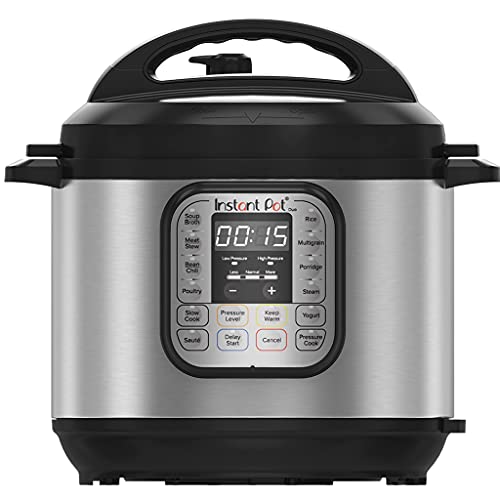
(affiliate link — we earn a small commission at no extra cost to you)
The Appliance I Was Sceptical About Longest
I waited 18 months before buying an Instant Pot. I’d read too many breathless reviews that claimed it would revolutionise my cooking and replace everything else in the kitchen. The overclaim made me suspicious.
After two years of daily use, the reality is more nuanced and more useful than either the hype or the scepticism. This is the honest version.
Instant Pot Duo 7-in-1 Specs
| Spec | Detail |
|---|---|
| Capacity | 6 litre (also available in 3L and 8L) |
| Functions | Pressure Cook, Slow Cook, Rice, Sauté/Sear, Steam, Warm, Yogurt |
| Max pressure | 15 PSI |
| Inner pot | Stainless steel (dishwasher safe) |
| Sealing ring | Silicone (replaceable) |
| Display | Digital, pre-set buttons + manual |
| Dimensions | 33 cm D × 30 cm H |
| Weight | 5.5 kg |
| Warranty | 1 year |
| Price | ~£90 |
The One Thing Nobody Tells You
The come-to-pressure time.
Every Instant Pot recipe says “cook for 12 minutes” and everyone assumes that means 12 minutes total. It doesn’t. The Instant Pot must heat the contents until steam pressure builds before the cooking timer starts. This takes 8–15 minutes depending on how full the pot is and the temperature of the contents.
A “12-minute” chicken recipe is actually:
– 12 min come-to-pressure + 12 min pressure cook + 5–10 min natural release = 29–34 minutes total
This is still faster than many conventional methods and the hands-off nature of it is valuable. But it’s not fast in an absolute sense. The Instant Pot is a time-shifter — it does hard cooking unattended so your active time is minimised, not a speed machine.
Once I adjusted my expectations around this, the Instant Pot became genuinely useful rather than occasionally frustrating.
What Works
Soups and stocks that are actually good
The best use case for the Instant Pot, full stop. A chicken carcass + water + aromatics → 45 minutes pressure cook → better stock than 3 hours on the hob. The pressure extracts gelatin and flavour from bones in a way that even a long simmer doesn’t match.
My Sunday ritual now includes making stock from the weekend roast chicken carcass while I meal prep. I use it all week for rice, pasta sauces, and soup bases.
Dried pulses without soaking
Chickpeas from dry in 35 minutes. Lentils in 12 minutes. Black beans in 25 minutes. The price difference between dried and canned is meaningful at family scale, and the texture of pressure-cooked dried pulses is better than tinned. I no longer buy tinned chickpeas or lentils.
Stews and curries in a fraction of the conventional time
Beef stew that would require 2 hours braising in the oven takes 35 minutes in the Instant Pot (including come-to-pressure). The meat is as tender or more tender than the oven version. I make bolognese for 10 portions on Sundays in 25 minutes of pressure cooking.
Rice is perfect every time
The Instant Pot makes better rice than I can make in a saucepan, consistently. 1:1.25 ratio of rice to water (white rice), 3 minutes high pressure, 10 minutes natural release. Every grain perfectly cooked, no catching on the bottom.
This function alone is used 4–5 times a week in my house.
Sauté/Sear function saves a hob step
The ability to sauté onions and brown meat in the Instant Pot before pressure cooking means one pot for the entire recipe — no separate pan, no extra washing up. The sauté function runs hot enough for genuine browning, not just warming.
What Doesn’t Work
Crispy anything
An Instant Pot is a moist-heat appliance. Everything that comes out of it is soft or moist. There is no way to produce crispy skin, crunchy coatings, or caramelised surfaces in an Instant Pot. For crispy results, use the air fryer.
Small quantities
The Instant Pot requires a minimum liquid level (usually ½ cup / 120ml) to build pressure. Cooking small portions — one chicken breast, two servings of rice — is technically possible but inefficient. The appliance excels at batch cooking. For small daily portions, a hob or air fryer is better.
Fast weeknight cooking (when time actually is short)
The come-to-pressure time makes the Instant Pot genuinely slow for the first 10–15 minutes. On a Tuesday when dinner needs to be on the table in 20 minutes, the air fryer is the right tool. On a Sunday when dinner needs to be good at 7pm and you have 10 minutes of active prep time, the Instant Pot is the right tool.
Delicate seafood
Fish and prawns pressure cook in seconds and are destroyed by the minimum cook times. Add seafood in the last 5 minutes of slow cooking only, or cook it separately.
Real Weekly Use: What I Actually Cook
| Frequency | Recipe | Function |
|---|---|---|
| 4–5× per week | White or brown rice | Rice preset |
| Weekly | Chicken stock (from carcass) | Pressure cook, 45 min |
| Weekly | Sunday bolognese (10 portions) | Sauté then pressure, 25 min |
| Weekly | Chickpeas or lentils from dried | Pressure cook |
| 2× per month | Beef or lamb stew | Sauté then pressure |
| 2× per month | Weeknight curry (chicken or vegetable) | Sauté then pressure, 20 min |
| Monthly | Yogurt | Yogurt function |
The Learning Curve
Week one feels uncertain. The pressure release valve makes an unexpected hiss when it depressurises; the “sealing” vs “venting” position of the valve is a new concept; the difference between natural release (10 min of idle) and quick release (immediate venting) affects texture and you need to learn which your recipe requires.
Week two feels normal. By week three, you’re using it without consulting the manual.
My advice: cook rice in it for the first three uses. Low stakes, fast, and by the third time you’ll understand the machine. Then try a soup. Then a stew. You’ll be confident within a week.
3L vs 6L vs 8L: Which Size?
| Size | Best for |
|---|---|
| 3L | 1–2 people, or specific small-batch recipes |
| 6L | Families of 3–5 — the right size for most people |
| 8L | Families of 6+, batch cooking for freezing, large cuts of meat |
Buy the 6L unless you have a specific reason for another size.
Verdict
The Instant Pot Duo is one of the most genuinely useful kitchen purchases I’ve made — but only once I stopped expecting it to be something it isn’t. It’s not an air fryer replacement. It’s not a speed machine. It’s a hands-off cooking tool that transforms the economics of soups, stews, stocks, and pulses, and makes Sunday batch cooking faster and better.
After two years, it gets daily use (rice), weekly use (stock and bolognese), and monthly use (stews and curry). It has never malfunctioned. The sealing ring smells faintly of last week’s curry permanently, which is its one genuine annoyance.
[CHECK PRICE ON AMAZON]
FAQs
Is the Instant Pot safe?
Yes — there are multiple redundant safety systems. The lid physically cannot be opened under pressure. Modern Instant Pots are significantly safer than old-style stovetop pressure cookers.
Does the Instant Pot replace a slow cooker?
The slow cook function works but runs slightly hotter than most dedicated slow cookers, which can produce drier results on an 8-hour low setting. Adequate, not optimal.
What’s the difference between Instant Pot Duo and Instant Pot Pro?
The Pro adds a sous vide function, more precise temperature control, and a fancier display. The Duo covers 95% of use cases at a lower price. Buy the Duo first.