(affiliate link — we earn a small commission at no extra cost to you)
The Question Everyone Gets Wrong
Most Crockpot vs Instant Pot comparisons online are written by people who own one and are defending the purchase. I own both, use both regularly, and genuinely think each is the right answer for different cooking situations.
The real question isn’t which one is better — it’s which one matches your cooking style.
The Core Difference
Crockpot / Slow Cooker: Low heat (70–95°C) applied for 4–10 hours. You put food in in the morning, come home to dinner. True set-and-forget.
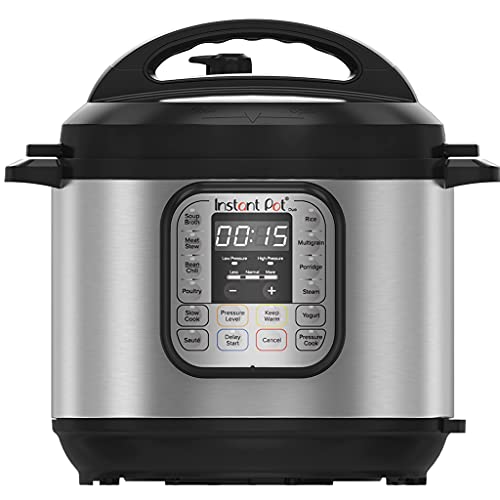
Instant Pot: High-pressure steam cooking (up to 120°C) that dramatically reduces cooking time. A stew that takes 8 hours in a slow cooker takes 25 minutes in the Instant Pot.
These are different appliances solving different problems. Comparing them is like comparing a marathon to a sprint — both are running, neither is wrong.
Head-to-Head Comparison
| Factor | Crockpot | Instant Pot |
|---|---|---|
| Stew (family portion) | 8 hrs low | 35 min (including pressure time) |
| Chicken thighs | 4–5 hrs low | 15 min pressure + 10 min release |
| Dried chickpeas | Not suitable | 35 min from dry |
| Rice | Not suitable | 13 min total |
| Chicken stock | Not suitable | 45 min |
| Active time required | Minimal (load + go) | 5–10 min prep + monitoring come-to-pressure |
| Learning curve | Very low | 1 week |
| Cleanup | Easy (ceramic pot) | Easy (stainless pot) |
| Price | £28–£75 | £90–£130 |
| Sauté/brown function | Some models only | Yes (all models) |
When the Crockpot Wins
You need true set-and-forget
Put a chicken stew in at 8am on low. Come home at 6pm. Dinner is ready. You didn’t think about it for 10 hours.
The Instant Pot requires you to be present for the first 15 minutes (come-to-pressure monitoring). The Crockpot requires nothing after you close the lid.
For parents who leave the house early and want dinner ready on return, the Crockpot’s all-day cooking is a meaningful practical advantage.
You’re making long-braise recipes that benefit from time
Some recipes genuinely improve with 8 hours of gentle heat rather than 25 minutes of pressure. Pulled pork develops deeper flavour, certain stews have a more complex texture, and dishes with bones release gelatin gradually in a way that slow cooking enhances and pressure cooking compresses.
An Instant Pot produces excellent pulled pork. A Crockpot produces better pulled pork, given enough time. The difference is meaningful to food people; it may not matter to children who put it in a wrap with coleslaw.
Budget is a primary constraint
The best slow cooker for basic use (Tower T80280) costs £28. The Instant Pot starts at £90. For the same use case — stews, soups, braised meats — the £28 slow cooker does the job adequately. The Instant Pot does much more, but it costs much more.
When the Instant Pot Wins
You need weeknight speed
The Crockpot requires planning 8 hours in advance. The Instant Pot can produce a stew in 35 minutes. For a Tuesday when you forgot to plan, the Instant Pot is the appliance that saves dinner.
You want to cook rice properly
The Instant Pot makes perfect rice in 13 minutes. No slow cooker does this — they run too hot and the wrong shape for rice. For families who eat rice multiple times per week, this function alone is compelling.
You want to use dried pulses
Pressure cooking chickpeas from dry takes 35 minutes. Slow cooking isn’t suitable. The Instant Pot unlocks cheaper, better-quality pulses.
You want one appliance that does many things
Pressure cook, slow cook, sauté, steam, rice cooker, yogurt maker — all in one pot. The Crockpot does one thing well. The Instant Pot does seven things adequately to very well.
Which Should a Family of Five Buy First?
If you cook primarily at weekends and plan ahead: Crockpot first, at lower cost. Load it Saturday morning for a Sunday evening dinner while you’re out.
If weeknight speed matters: Instant Pot first. You can also slow cook in it (adequately), so you’re not missing the Crockpot’s main function entirely.
If budget is tight: Crockpot first (£28 tower vs £90 Instant Pot). You get 80% of the utility for 30% of the cost.
If you’ll batch cook stocks, soups, and rice weekly: Instant Pot first. The rice function alone pays for the price difference within a few months.
Do You Need Both?
After two years, I use both. The Crockpot gets loaded on Saturday mornings for Sunday dinners when I want a long braise. The Instant Pot handles weeknight cooking, rice, and stocks.
If I had to choose one: Instant Pot, because of the versatility. The Crockpot excels at one specific thing. The Instant Pot excels at many things and handles slow cooking adequately.
But if budget is genuinely a factor: start with a £28 Tower slow cooker, see how much you use it, then upgrade to an Instant Pot when you’ve confirmed you want that style of cooking.
FAQs
Can the Instant Pot replace a slow cooker completely?
The Instant Pot’s slow cook function works but runs slightly hotter than a dedicated slow cooker. For 4-hour and 6-hour cooks it’s adequate; for 8-10 hour all-day cooks, a dedicated slow cooker performs more consistently.
Is the Crockpot safe to leave all day?
Yes — slow cookers are designed for unattended all-day cooking. The low heat setting is specifically safe for 8–10 hours unattended. Always use the low setting for all-day cooks, not high.
What’s the difference between a Crockpot and a slow cooker?
Crockpot is a brand name; slow cooker is the category. All Crockpots are slow cookers; not all slow cookers are Crockpots. In everyday use, the terms are interchangeable.